
Live listing ownership audit
Jun 6, 2026
9 min read
A live listing can look fine from the outside and still be drifting inside the branch.
The photos are up. The description is clean enough. Viewings are happening. The vendor has not complained yet. But ask 3 people who owns the next update and you get 3 different answers: the lister, the negotiator who ran Saturday’s viewings, and the manager who promised to review price after the weekend.
That is where live listings start to wobble. The team may have a system. People may still remember the property. The problem is smaller and more annoying: the ownership fields no longer agree.
For newer agents, a live listing is active client work. Someone has to keep the facts current, collect viewing feedback, speak to the seller, review price and positioning, and make sure the next dated action is real. When those jobs split across people without a quick ownership check, the seller hears silence or mixed messages.
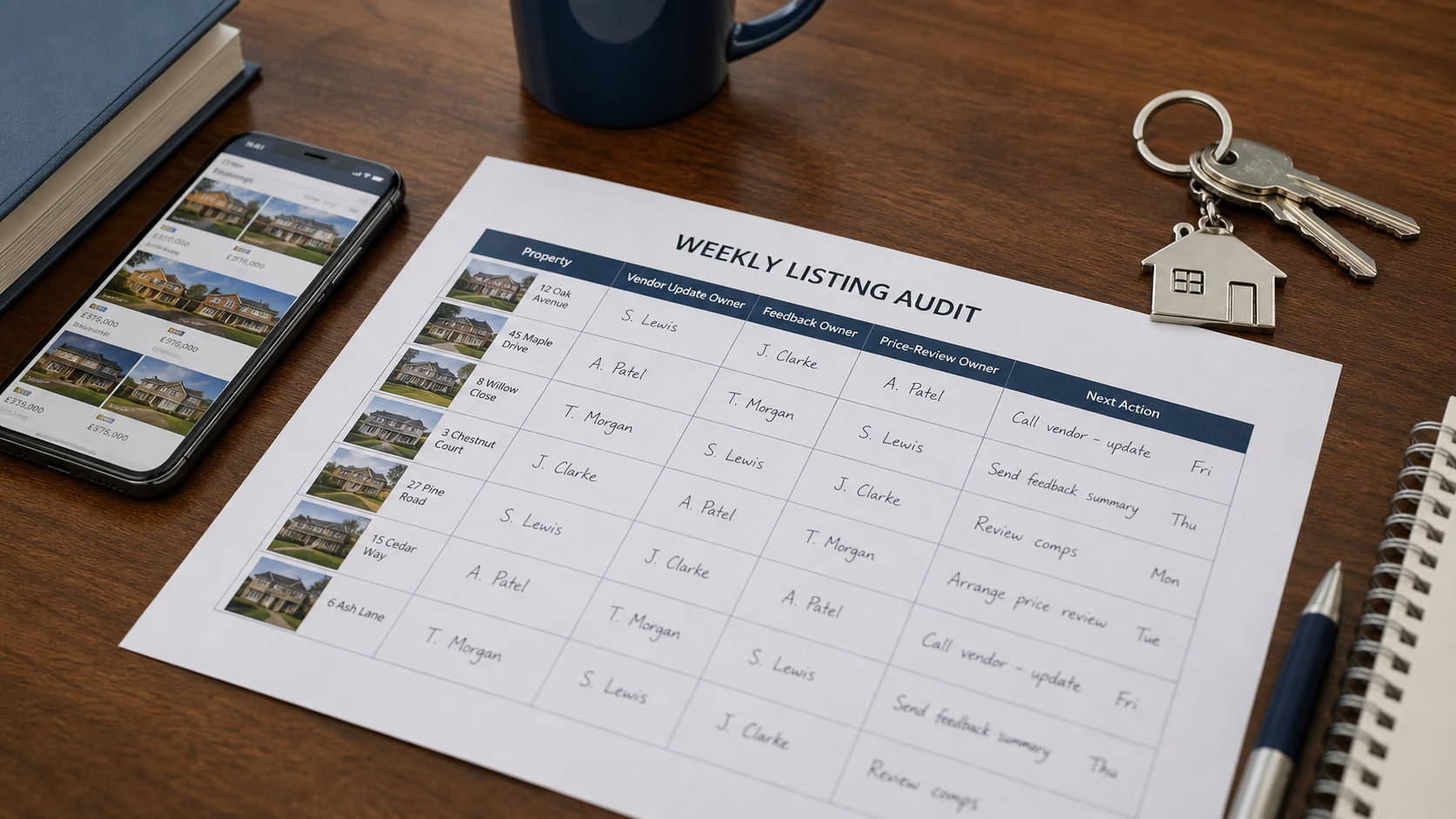
Once a week, spend 12 minutes checking 5 fields on every live listing that has not had an offer accepted. Do not run a full listing review. Do not rewrite the marketing plan. Find the owner mismatches while they’re still easy to fix.

The 5 fields that have to agree
Most stale-listing reviews start too late. By the time the vendor asks why nothing is happening, the team has to reconstruct 3 weeks of feedback, price conversations, viewing notes, and half-finished promises.
This audit happens earlier. It checks whether the team knows who is carrying the live work right now, before anyone starts debating price or a marketing relaunch.
Check these 5 fields:
| Field | What it means | What a mismatch looks like |
|---|---|---|
| Current listing owner | The person accountable for the listing record and seller relationship today | The lister left the branch, changed role, or is on leave, but still appears as owner |
| Next vendor update owner | The person who will speak to the seller next | The next call is assigned to an admin, but the price review belongs to a negotiator |
| Feedback owner | The person chasing, summarising, and interpreting viewing feedback | Feedback sits in private notes or messages, with no named person turning it into a seller update |
| Price-review owner | The person responsible for deciding whether the evidence supports a price or positioning conversation | Everyone assumes the manager will raise it, but no review is booked |
| Next dated action | The next concrete action on the listing, with a date | The listing has viewings logged but no next action after the last appointment |
The test is simple: if these fields name different people, there must be a reason. Sometimes that is fine. A negotiator may own feedback while a manager owns the price conversation. An admin may prepare the vendor update pack while the listing agent makes the call.
But the split must be visible. If no one can explain why the ownership is split, the listing is already relying on memory.
Run the audit like a branch habit, not a meeting
Do this on the same day each week, ideally before the busiest viewing block. Friday morning works for some branches because the weekend is coming. Monday morning works if the branch wants to clean up after Saturday viewings.
Keep it small. One person can run the first pass, then send only the exceptions to the team. The audit should take 12 minutes because it is checking alignment, not solving every listing problem on the spot.
Use this routine:
| Minute | Action | Output |
|---|---|---|
| 0-2 | Filter to live listings with no accepted offer | A short list of active seller work |
| 2-5 | Sort by oldest next dated action | The listings most likely to be drifting |
| 5-8 | Compare the 5 ownership fields | A list of owner mismatches |
| 8-10 | Mark each mismatch as valid split, wrong owner, or missing action | A clean exception list |
| 10-12 | Assign one fix per exception | A named owner and date |
The discipline is stopping there. A 12-minute audit becomes useless if it turns into a debate about every vendor, every price, and every buyer comment.
If the listing genuinely needs a deeper commercial review, create that as the next action. If it only needs ownership cleanup, fix the owner and move on.
What to do when the owners do not match
Owner mismatch can be fine when everyone can see the reason. Hidden mismatch is the problem.
Use 3 labels:
| Label | When to use it | What to do next |
|---|---|---|
| Valid split | Different people own different parts for a clear reason | Add a short note explaining the split and keep the next action dated |
| Wrong owner | The named owner is no longer the person doing the work | Reassign the field and tell the affected person |
| Missing action | The ownership may be right, but there is no dated next step | Create one listing-linked task with owner, reason, and due date |
Many branches miss one detail: a missing action should not become a vague reminder.
“Call vendor” is weak. “Call vendor by Thursday with feedback from 4 viewings and confirm whether price review should happen before next weekend” is useful. It tells the owner what the call is for, what evidence matters, and what decision may follow.
That is also why the task needs to stay attached to the listing. A reminder floating in someone’s calendar can tell them to call. It cannot show the viewing feedback, the last seller promise, the current asking price, or the reason the branch is worried.
If your wider task list already feels noisy, read Real estate tasks need context, not just reminders. For this audit, the task rule is narrower: every owner mismatch needs either a confirmed split or one dated fix.
Keep the audit tied to seller trust
Treat this as a client communication control, not admin for admin’s sake.
Sellers do not usually complain because a field is wrong. They complain because the branch has gone quiet, or because two people tell them different things. One agent says feedback has been positive. Another says buyers keep raising the same objection. A manager says the price should be reviewed after 10 viewings, but no one has counted which viewings actually happened.
That is why the audit checks feedback owner and price-review owner separately. They are related, but they are separate jobs.
The feedback owner gathers and summarises what the market is saying. The price-review owner decides whether that evidence supports a conversation about price, presentation, access, or timing. If those 2 owners are different, the handoff has to be explicit.
Professional standards point in the same direction. The NAR Code of Ethics frames real estate communications around presenting a true picture, including current online information. In the UK, the government’s material information consultation says buyers need relevant property information early, clearly, and accurately. The Property Ombudsman also maintains property industry codes of practice for recognised service standards.
Those sources are not weekly audit templates. They do make the operating point clear: live listing work needs current ownership because public information and client advice keep moving.
Where AvaroAI fits
AvaroAI’s listing management treats a listing as a live record, not a finished advert. The property data, documents, tasks, viewings, notes, and status need to sit close enough together that a branch lead can see where ownership has split.
For this audit, the useful feature is the ability to filter live listings, compare ownership fields, and open the listing record without hunting through inboxes or private notes. If the next dated action disagrees with the feedback owner, the branch can correct it on the listing itself. If the price-review owner is waiting on viewing feedback, the task can stay attached to the same record.
That matters because listing lifecycle management can become too abstract. Agents do not need a diagram of every possible stage on a busy Friday. They need to know which live listings have no clear owner before the seller rings.

Try it on 10 listings first
Test this on 10 live listings before making it a branch policy.
Pick the listings most likely to expose the problem:
- 3 with no offer after several viewings
- 2 where the listing agent is away, overloaded, or no longer the day-to-day contact
- 2 where feedback has been patchy
- 2 where the vendor is expecting a price or strategy review
- 1 that everyone assumes is fine
For each listing, write down the 5 fields. Then ask one question: if the vendor called in 20 minutes, would the person answering know who owns the next update?
If the answer is no, fix one thing. Reassign the vendor update. Add the missing dated action. Name the person collecting feedback. Book the price review. Leave a note explaining a valid ownership split.
The audit works because it is deliberately small. It catches the moment before slowing down becomes confusion, and before confusion becomes a seller wondering whether anyone is actually in charge.
If the listing is already stale, you need a deeper review. Start with Why property listings go stale after launch. If the problem is a handover between agents, use The listing handover points agents miss. But if the listing is still live and moving, give it 12 minutes and check the owners first.
Related reading
Disclaimer: This page may contain AI-assisted content. The information is provided solely as a general guide and may not be correct, complete, or current, including, but not limited to, our full or applicable service offerings. While we strive for accuracy, no guarantee is made regarding correctness or completeness, and no expectation should be made as such. Please contact us directly to confirm any details before utilizing our service.