
A seller-call triage rule before valuation
Jun 9, 2026
9 min read
A seller rings while you’re between appointments. They might be moving for work, testing the market, handling a probate sale, or trying to work out whether last year’s price still holds.
It’s tempting to treat every decent seller enquiry the same way: get the address, book the valuation, send the confirmation, and sort the rest later.
That works until the valuation is tomorrow morning and the branch still doesn’t have clear owner details, an access route, a price expectation, or timing context.
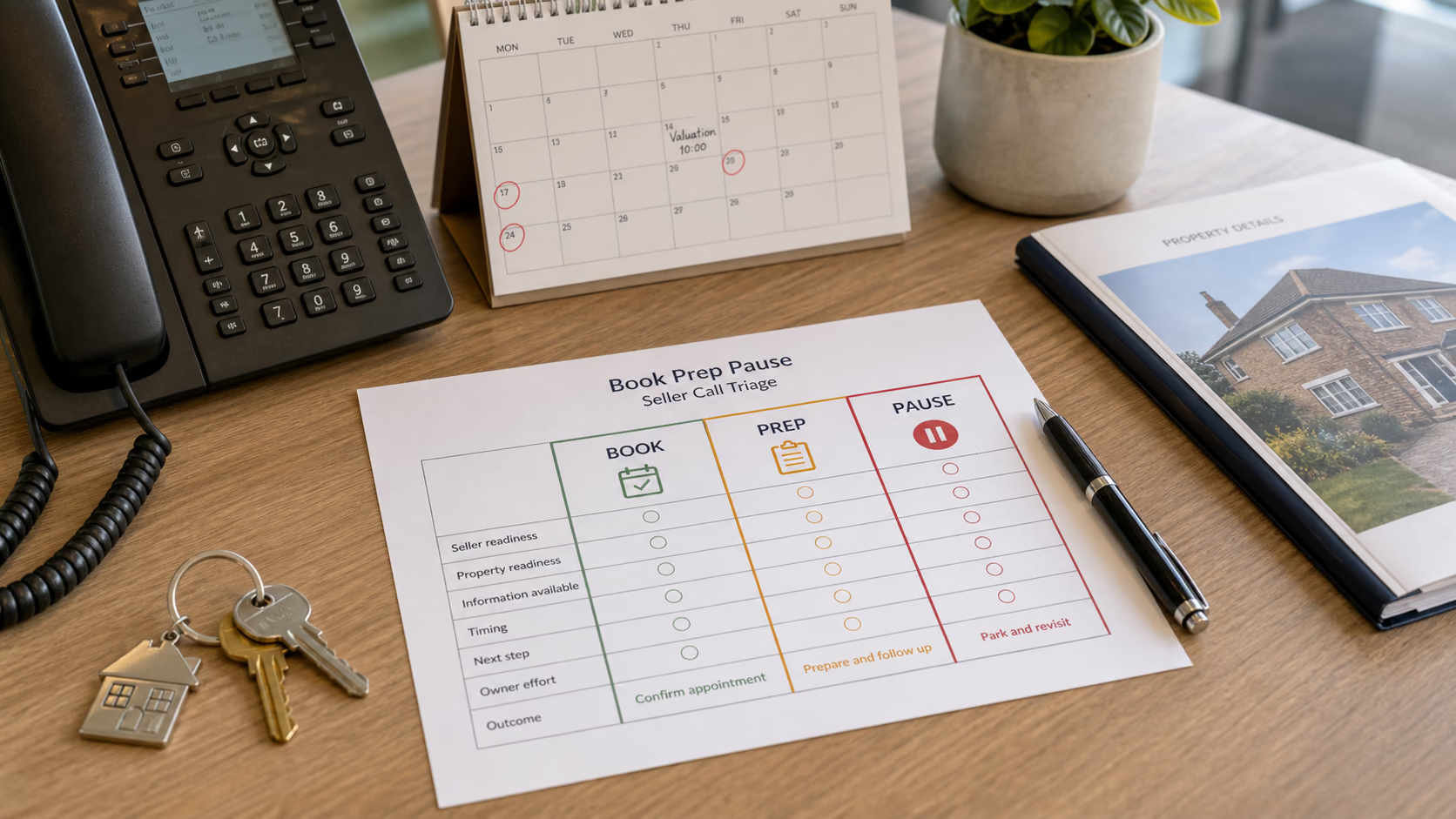
The first seller call has to do more than capture a lead. It has to decide whether the next move is Book, Prep, or Pause.
That triage habit helps new agents and small teams because it turns a vague enquiry into the next visible action. The valuation starts with fewer surprises, and the branch doesn’t spend the next day reconstructing a 7-minute phone call.

Sort every seller call into 3 states
End the call with 1 of 3 states.
| State | What it means | Next action |
|---|---|---|
| Book | The seller, property, timing, and access are clear enough to schedule the valuation | Book the appointment and confirm what the seller should have ready |
| Prep | The valuation is likely worth booking, but one or more details must be clarified first | Create prep tasks before or alongside the appointment |
| Pause | Something is unclear enough that booking would create risk or wasted time | Hold the enquiry until authority, access, timing, or expectations are clearer |
The point is speed with a little discipline. A first-time seller with a clear address, realistic timing, and easy access probably belongs in Book. A seller who’s abroad and says their sibling “also needs to agree” belongs in Prep. A caller who won’t say who owns the property, wants marketing tomorrow, and can’t confirm access belongs in Pause.
The 9 details worth capturing before valuation
First-call notes should be short, but they can’t be vague. A useful seller record tells the next person what kind of appointment they’re walking into.
Capture these 9 details:
- Seller name and contact details.
- Their role: owner, joint owner, family member, landlord, executor, company contact, or other representative.
- Property address and type.
- Current occupancy: owner-occupied, tenanted, vacant, short-let, or occupied by someone else.
- Reason for selling and desired timing.
- Access route: who has keys, when viewings are possible, pets, tenants, alarms, parking, or gate codes.
- Known issues the seller has already mentioned, such as repairs, lease details, title questions, missing certificates, or neighbour matters.
- Price expectation, including where that number came from.
- The promise you made before hanging up.
Public seller-intake templates collect similar basics: contact details, property details, listing information, and financial context. A real estate seller intake form is a useful reference for the raw information. The operating value comes from deciding what each answer triggers.
“Tenant in place” should trigger an access and notice check. “My brother is also on the title” should trigger a co-owner task. “We need to sell by September” should change the valuation conversation. “We think it’s worth 15% more than the last comparable sale” should prompt price-expectation prep before the agent walks in.
That’s the difference between a new client workflow in real estate and a contact form that stores answers.
The Book, Prep, Pause rule
At the end of the call, ask one question: what would make this valuation awkward, risky, or less useful if it stayed unresolved?
Then sort the record.
| If the call reveals… | State | What to do next |
|---|---|---|
| Clear seller role, clear address, workable access, normal timing | Book | Schedule the valuation and send a short preparation note |
| Joint owner, family representative, company seller, executor, or landlord involved | Prep | Confirm who must approve the appointment, marketing, and future instruction |
| Tenants, limited access, keys held elsewhere, pets, alarms, or parking constraints | Prep | Add an access task with owner, due date, and notes for the valuer |
| Seller gives a price expectation without context | Prep | Record the number and ask where it came from before the appointment |
| Seller is unsure whether they want to sell or only wants a free price check | Prep | Book only if the branch accepts that appointment type, and mark the motivation clearly |
| Caller cannot confirm their authority or relationship to the owner | Pause | Do not move into valuation prep until the role is clear |
| Seller wants public marketing before basic authority, access, or property facts are clear | Pause | Explain what must be confirmed before marketing work starts |
| Known defect, dispute, lease, title, or compliance issue is mentioned | Prep or Pause | Record the issue and assign the right person to check it before the appointment |
This separates normal uncertainty from risk. A seller who doesn’t know the exact floor area belongs in Prep. A caller who can’t explain their role, wants you to act before basic facts are clear, or promises access they don’t control belongs in Pause.
The HousingWire listing appointment checklist makes a similar practical point from the appointment side: agents should understand the seller’s situation and goals before they arrive. The triage rule pulls that discipline 1 step earlier, while the branch still has time to set up the appointment properly.
Turn prep answers into owned tasks
Seller intake gets weak when the first agent captures useful details, then leaves them as private notes.
“Brother is co-owner, check later” is not enough. Who checks? By when? Does it affect the valuation appointment, the marketing timeline, or both?
Client intake automation should be boring here: take a seller answer and create the next visible piece of work.
Good prep tasks look like this:
| Prep task | Linked to | Owner | Due |
|---|---|---|---|
| Confirm co-owner name and contact details | Seller contact and draft property record | Agent | Before valuation confirmation |
| Check access route with tenant or key holder | Draft property record | Admin or agent | 24 hours before valuation |
| Ask seller where price expectation came from | Seller contact | Agent | Before valuation prep call |
| Record known repair issue for valuer | Draft property record | Agent | Same day |
| Confirm whether local compliance checks are needed before instruction | Seller contact | Manager or compliance owner | Before marketing work starts |
For UK estate agency businesses, HMRC’s anti-money-laundering guidance for estate agency businesses is one reminder that onboarding facts can have compliance consequences. The rules vary by jurisdiction, but the operating habit is the same: facts that affect authority, identity, or permission shouldn’t live only in a call note.
AvaroAI is built around that distinction. A seller call can update the contact record, start a draft pre-valuation property record, and attach prep tasks to the right contact, property, or appointment. If the task belongs to the valuation, it should travel with the valuation context. If it belongs to the seller’s role, it should sit with the contact.
Loose reminders make people remember the call twice. Linked tasks let the next person act without replaying it from memory.
Keep the first call tight
Don’t turn this into a 40-question interrogation. Sellers call because they want help.
Use this short call shape:
- Confirm the property and caller role.
- Ask why they are considering selling and when they would ideally move.
- Pin down access and any obvious constraints.
- Ask what they think the property may be worth and why.
- Check whether anyone else must approve the next step.
- Decide Book, Prep, or Pause.
- Repeat the next action before ending the call.
For Book: “I have booked the valuation for Thursday at 10. I will send a confirmation now with the details to have ready.”
For Prep: “Before I confirm the appointment, I need to check the access position because the property is tenanted. I will come back to you by 4 today.”
For Pause: “I cannot sensibly book the valuation until we know who can approve the appointment and later instruction. Send me the owner details first, then I can move this on.”
Specific wording protects the agent as much as the seller. It stops the branch making a promise it can’t keep.

Review paused and prepped sellers every afternoon
Run a 10-minute review each afternoon:
- Which Prep sellers have a valuation date but still have missing access, owner, document, or expectation details?
- Which Pause sellers need one specific clarification before they can move forward?
- Which booked valuations have no recorded price expectation or reason for selling?
- Which promised callbacks are due before close of business?
- Which draft property records should be closed because the seller is not ready?
This is a small-team habit. One agent can do it before leaving the office. Tomorrow’s valuations start with cleaner context, and admins stop chasing mystery access details.
The seller gets a calmer experience too. They don’t have to repeat the same facts to 3 people, and the valuer doesn’t arrive blind.
The first seller call is more than a diary entry. It’s the point where the agency decides what kind of work this enquiry has become.
Book it, prep it, or pause it. Anything blurrier is where missed details start.
Related reading
Disclaimer: This page may contain AI-assisted content. The information is provided solely as a general guide and may not be correct, complete, or current, including, but not limited to, our full or applicable service offerings. While we strive for accuracy, no guarantee is made regarding correctness or completeness, and no expectation should be made as such. Please contact us directly to confirm any details before utilizing our service.