
A viewing feedback routine for clearer UK vendor updates
May 26, 2026
9 min read
The tenth viewing is often where a vendor update changes shape.
After 1 or 2 appointments, everyone can shrug. The right buyer may not have walked through yet. After 10, the pattern is harder to ignore.
By then, the agent has heard enough comments to know whether buyers are circling the same concern, whether the asking price still holds up, and whether the vendor needs advice instead of another polite “we’ll keep you posted”.
For a newer agent, a vendor update is the regular conversation with the seller after their property has gone live. You report viewing activity, buyer reaction, missing feedback, follow-up, and your recommendation for what happens next. The hard bit is turning messy, emotional feedback into a calm next step.
In the UK, that conversation also has a compliance edge. The Property Ombudsman’s Code of Practice for Residential Estate Agents says agents must record arranged viewings, record feedback from those viewings, and pass that feedback to the seller within an agreed timescale. The useful version of that obligation is a vendor call built around evidence, not admin.

Start with the pattern, not the loudest comment
One buyer can dislike a kitchen worktop, a north-facing garden, or the size of the second bedroom. That does not make it market evidence.
The mistake is letting the most recent comment dominate the vendor call. It usually happens because the agent has 6 bits of feedback in their head, 2 in WhatsApp, 1 in the diary, and 1 missing. The loudest one wins because it is easiest to remember.
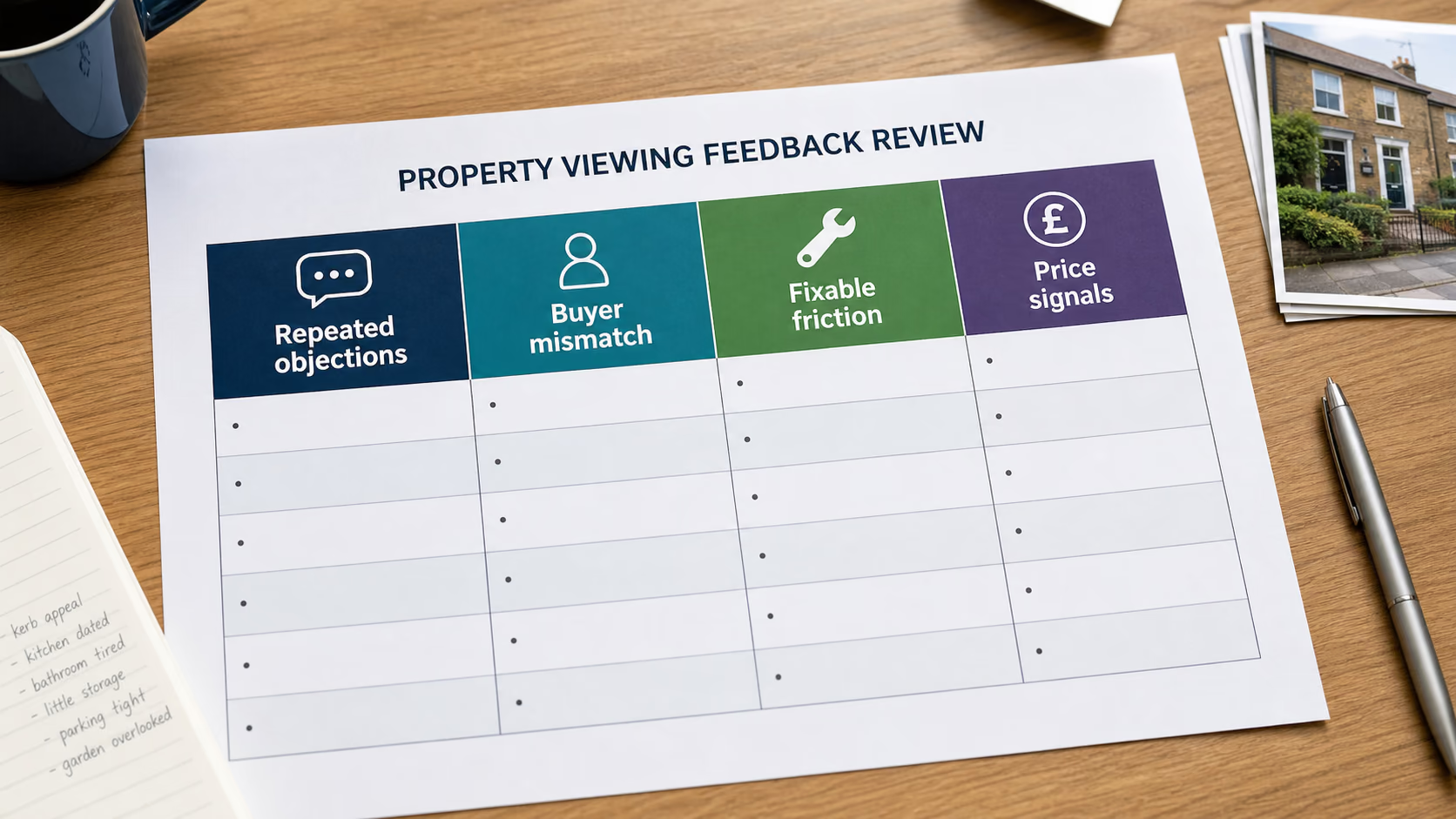
Before calling the vendor, strip the feedback into 4 groups:
| Group | What it means | Example |
|---|---|---|
| Repeated objection | More than one buyer raises the same concern | “The road is busier than expected” came up 4 times |
| Buyer mismatch | The viewer was never likely to buy this property | Wanted detached, viewed a semi because it was nearby |
| Fixable friction | Something the vendor can change quickly | Cluttered box room, awkward access slot, poor lighting |
| Price-positioning signal | Buyers like the home but hesitate at the level | “Nice house, but we have seen bigger at this price” |
That is the difference between feedback and advice. Feedback says, “Two viewers mentioned the small bedroom.” Advice says, “The small bedroom is coming up often enough that we should improve how it presents or be ready for buyers to use it in negotiation.”
Rightmove’s seller guidance on handling viewings makes a useful point for vendors: sellers should leave the agent to gather honest feedback because buyers are usually more open when the owner is not hovering. That honesty only helps if the agent groups it properly.
Build a 10-viewing evidence pack
Don’t call the vendor from memory. Build a short evidence pack first.
Use this 10-minute routine before the update:
- Count completed viewings, cancelled viewings, no-shows, second viewings, and missing feedback.
- Pull out the repeated comments only. Ignore one-off taste unless it affects a likely negotiation.
- Mark each viewer as cold, possible, active, or offer-ready.
- Note whether each active buyer is proceedable: cash, mortgage, sale agreed, property to sell, or unclear.
- Separate property presentation issues from price comments.
- Write one recommended next action before the call.
That last step matters. A vendor update without a recommendation can sound like a weather report: activity happened, people reacted, and everyone now waits.
For example:
| Evidence after 10 viewings | Better vendor recommendation |
|---|---|
| 7 viewings, 5 comments about dark rear room, no second viewings | Improve lighting and photos before discussing price |
| 10 viewings, 6 liked the property, 4 said similar homes felt better value | Prepare a price review using competing stock |
| 8 viewings, 3 active buyers, 2 waiting on mortgage positions | Chase buyer readiness before changing campaign |
| 10 viewings, mostly wrong-fit buyers from broad search alerts | Tighten applicant matching and advert wording |
Viewing management software in the UK earns its keep here, or it doesn’t. The calendar slot is not enough. The appointment needs outcome, buyer quality, objections, follow-up, and vendor-update status attached to it, so the agent can see the story across the listing.
Separate presentation fixes from price advice
Vendors can cope with difficult advice when it feels fair. They push back when the agent jumps too quickly from “some feedback was mixed” to “drop the price”.
Use this order:
- What buyers noticed before they discussed price.
- What buyers compared the property against.
- Which issues are fixable within a week.
- Which issues are built into the property.
- Whether the asking price still fits the evidence.
A box room full of storage is a presentation issue. A third bedroom that only works as a study may be a price-positioning issue. Poor viewing access is a process issue. A buyer who wanted parking when the listing never promised parking is a mismatch.
Lumping these together makes the vendor feel attacked. Sorting them turns the conversation into a set of practical choices.
The phrase “vendor management estate agent” can sound like software language, but the job is human: keep the seller informed without letting emotion or isolated comments distort the next decision. A good update protects the vendor from panic and protects the agent from drift.
Use a call structure the vendor can follow
The call should be short enough to land and structured enough that the vendor can hear the evidence.
Try this:
| Call stage | What to say |
|---|---|
| Activity | “We have had 10 viewings, 8 complete feedback responses, 1 second viewing, and 2 buyers still to chase.” |
| Buyer quality | “3 were strong matches, 4 were useful but unlikely, and 3 were too early in their search.” |
| Pattern | “The repeated point is the rear room feeling dark. Price came up from 3 buyers, but only after they compared it with larger houses nearby.” |
| Recommendation | “I would change the presentation first, then review price if the next 5 viewings repeat the same value concern.” |
| Owner | “I’ll arrange the new photos, chase the 2 missing responses, and call you Friday at 3pm with the next read.” |
Notice what’s missing: vague reassurance.
“The market is quiet” may be true, but it rarely helps. “We have the wrong buyers” may also be true, but then the next action should be to tighten matching, advert wording, or applicant qualification.
A vendor needs to know what you have learned and what you are doing with it.
Industry software documentation often reflects the same operational reality. Expert Agent’s guidance on chasing viewings treats feedback chasing, vendor feedback, status changes, and follow-up tasks as connected steps, not separate bits of admin. That is the right instinct, even if your branch uses a different system.
Make the next action owned before the call ends
The weakest vendor updates end with “we’ll monitor it”. Monitor what? Until when? Who is doing the work?
End with 1 of these owned actions:
| Situation | Next action |
|---|---|
| Missing feedback | Agent chases named buyers by a set time |
| Repeated presentation issue | Vendor changes a room, access window, cleaning, lighting, or staging |
| Repeated price resistance | Agent prepares a price-review comparison for a booked call |
| Strong buyer but unclear position | Agent qualifies funds, sale status, chain, and timing |
| Wrong-fit enquiries | Agent adjusts matching notes and listing wording |
| No clear pattern yet | Agent sets the next review threshold, such as 5 more viewings or 7 days |
AvaroAI’s task and event management earns its place in that last mile. A vendor call can create a follow-up task tied to the listing, not a loose reminder in someone’s phone. Viewing records can sit beside contact history, feedback, and property notes, so the next update starts from evidence rather than memory.
AvaroAI’s search and filtering also helps with the part agents often skip under pressure: checking whether the latest comment is actually repeated. Filter for viewings on the listing, missing feedback, second-viewing interest, price comments, and active buyer status. Vendor advice should come from connected records, not from the last conversation that happened to stick.
Keep the vendor update honest
The best vendor update after 10 viewings is rarely dramatic. It usually says one of 4 things:
| The evidence says | The honest advice is |
|---|---|
| Buyers like it but are not acting | Check price position and competing stock |
| Buyers are wrong-fit | Tighten matching and advert expectations |
| Buyers like it but one issue repeats | Fix the issue or account for it in negotiation |
| Feedback is incomplete | Chase before making a major recommendation |
The discipline is saying which one you are seeing.
If the branch uses estate agent diary software, don’t let the diary become the whole record. A viewing time tells you who was meant to arrive. It does not tell you whether the buyer is serious, what they objected to, whether they might come back, or what the vendor has already been told.
A proper update gives the vendor 3 things: a clean read of what happened, a fair interpretation of what it means, and a named next action. That is enough to make the next week less vague.

Related reading
Disclaimer: This page may contain AI-assisted content. The information is provided solely as a general guide and may not be correct, complete, or current, including, but not limited to, our full or applicable service offerings. While we strive for accuracy, no guarantee is made regarding correctness or completeness, and no expectation should be made as such. Please contact us directly to confirm any details before utilizing our service.