
A 3-minute viewing-note routine for new agents
May 27, 2026
8 min read
The viewing finishes. The buyer smiles, says they will “have a think”, and you have 9 minutes to get across town.
That is where new agents lose useful context. The details feel obvious while you are standing outside the property, then blur after 2 more viewings, 3 calls, and a seller asking whether anyone liked the kitchen.
A viewing note doesn’t need to be long. It needs to be written while the reaction is still fresh enough to separate polite noise from a buying signal. If you opened the record tomorrow morning, you should know what happened, who needs follow-up, and what you promised before your phone rang again.
For a new agent, this is the start of a real estate follow-up system: a repeatable habit that turns each viewing into buyer follow-up, seller follow-up, or a clean decision to leave the contact alone for now.

The note is for tomorrow, not for the moment
The trap is writing notes that only work while the memory is still warm.
“Liked it, follow up Friday” feels enough at 2:15pm. By Friday, it’s uselessly thin. Did they like the garden or the price? Was Friday a promised callback or your own reminder? Were they a serious buyer, a curious neighbour, or someone 6 months away from doing anything?
Good viewing notes do 3 jobs. They help you follow up with the buyer without sounding generic, give the seller something better than “positive feedback”, and leave enough context for another person if you’re off or pulled into another deal.
There is also basic professional discipline here. The Property Ombudsman code for residential estate agents says agents must record arranged viewings, feedback from those viewings, and pass feedback to the seller within an agreed timescale. That doesn’t mean every viewing needs a report. It does mean memory is a weak place to keep the only copy of what happened.
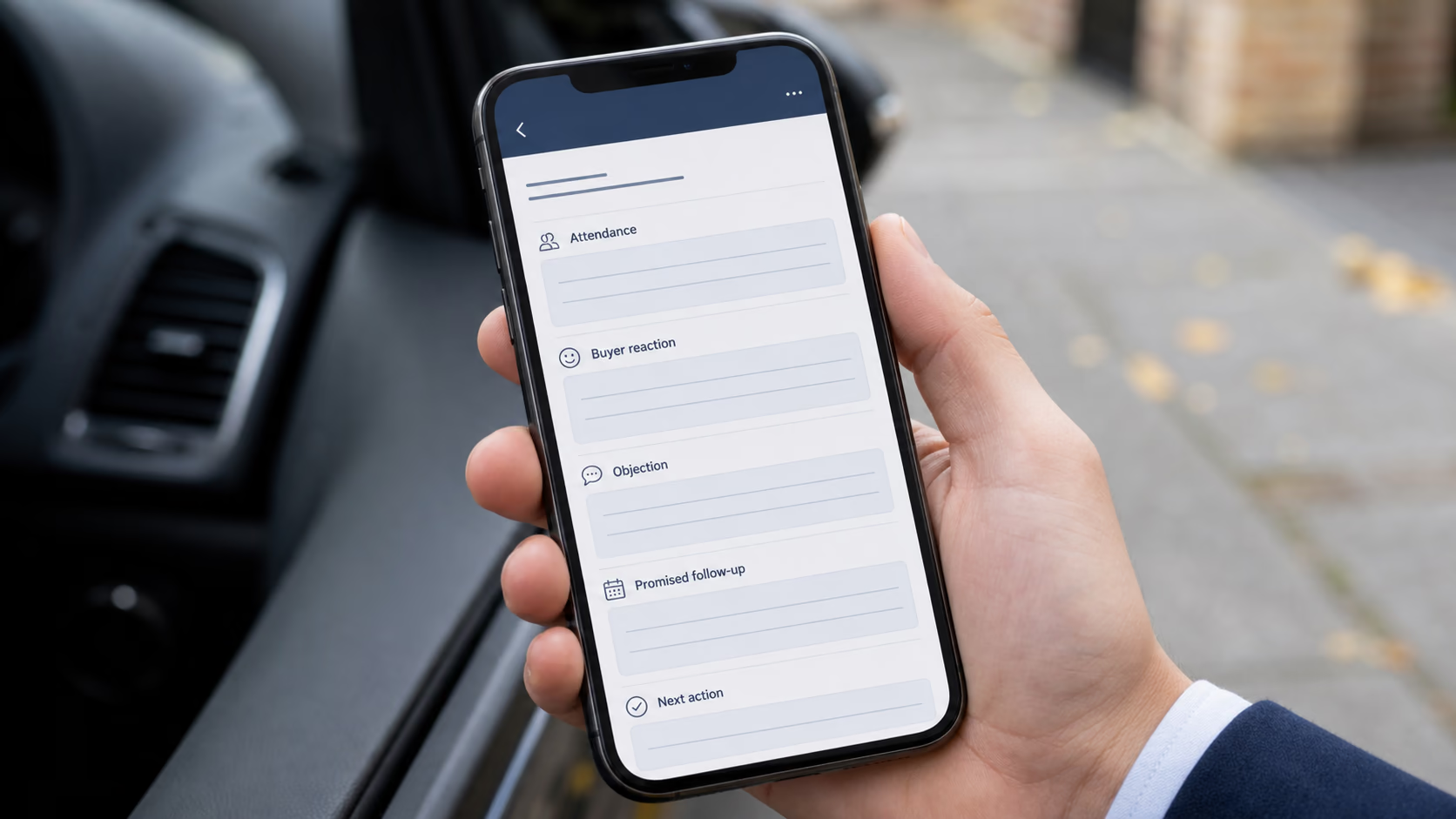
Use the 3-minute viewing note
Write this before you start the car, walk to the next appointment, or open your inbox and lose the thread.
| Field | What to capture | Example |
|---|---|---|
| Attendance | Who actually came and whether anyone else matters | “Buyer came with father, partner not present” |
| First reaction | The first honest signal, not the polite goodbye | “Loved light in rear room, quiet on bedroom size” |
| One quote or objection | The phrase you could use later without inventing tone | “Kitchen works, but we’d need more storage” |
| Buyer strength | Ready, possible, early, or not a fit | “Possible, mortgage agreed, needs school catchment” |
| Property fit | What this viewing changed about their search | “Budget fine, now wants south-facing garden” |
| Promise made | Anything you said you would send, ask, or check | “Send service charge details by 5pm” |
| Seller update | Whether the vendor needs feedback now, later, or not yet | “Include in end-of-day feedback, no urgent call” |
| Next action | The single next step with a date or time | “Call tomorrow after partner views photos” |
This is deliberately short. If you try to write a full story after every viewing, you’ll stop doing it by Thursday.
For buyer follow-up, the useful line is often the change in search shape. A buyer who rejects a property because the road felt too busy has given you a better brief.
For seller follow-up, keep one throwaway comment in proportion. A seller can use repeated feedback. They can’t use a dramatic retelling of one buyer’s offhand remark.
Separate reaction, meaning, and next action
New agents often cram reaction, meaning, and action into one sentence: “Buyer liked it but thought bedrooms were small, maybe send similar.” That hides the decision. Split it.
| What happened | What it might mean | What to do next |
|---|---|---|
| “Bedrooms too small” | The search may need larger floor area or fewer compromises | Ask whether bedroom size is now a dealbreaker |
| “Could see ourselves here” | Serious interest, but still needs timing and money checked | Ask if they want a second viewing or further details |
| “Need to talk to my partner” | Decision-maker missing | Send recap and book a time after partner has seen details |
| “Price feels high” | Could be objection, negotiation anchor, or weak fit | Ask what price would bring it back into consideration |
| “Garden is perfect” | Strong feature match | Update buyer preferences for future matches |
This is where a real estate follow-up checklist earns its keep. The checklist isn’t there to make you sound scripted. It stops you confusing “they said something” with “I know what to do next”.
The NAR 2025 Home Buyers and Sellers Generational Trends report is a useful reminder that buyers rate responsiveness and communication highly. For a new agent, that means responding with detail from the actual appointment, not a blank “just checking in” message.
Turn the note into one task before you move on
A viewing note that creates no action is just storage. Before you mentally leave the appointment, turn the note into 1 task by asking which person is waiting on you.
| If this is true | Create this task |
|---|---|
| Buyer asked for a document, cost, answer, or second slot | Buyer follow-up with exact item and deadline |
| Seller expects feedback after each viewing | Seller update with feedback summary and buyer strength |
| Buyer changed their search | Update requirements before sending more properties |
| Buyer was polite but not suitable | Mark as low fit or nurture, with no urgent chase |
| Another agent or admin may need to pick it up | Add a handoff note tied to the viewing |
This is the product lesson we keep coming back to while building AvaroAI: the calendar event is where the next piece of work shows itself.
That is why viewing outcomes should sit beside the contact and property record. In AvaroAI, a viewing can carry its outcome, feedback, linked contact, linked property, and follow-up task together. When a buyer says “too far from the station”, that should shape the next match. When a seller needs a same-day update, that should become a task attached to the property, not a hope scribbled in the margin.
A simple follow-up script that uses the note
Use this shape so the message refers to the actual viewing:
Hi [Name], thanks for coming to see [property].

You mentioned [specific reaction or objection], so I wanted to [send/check/ask] [next useful thing].

Do you want me to [clear next step], or should I keep an eye out for homes with [updated requirement]?
Hi Maya, thanks for viewing Elm Road.

You mentioned the garden worked well but the second bedroom felt tight, so I wanted to check whether bedroom size is now a firm dealbreaker.

Do you want me to send a couple of similar homes with larger second bedrooms, or would you still like me to ask about a second viewing?
That is real estate buyer follow-up with a reason. It proves you listened.
Seller follow-up works the same way:
The buyer liked the light in the living room and the garden, but raised bedroom storage as a concern. They are not ready to offer today. I am checking whether that is a firm dealbreaker or something they would revisit after discussing it at home.
That is more useful than “good viewing”, which tells the seller almost nothing.

Review the last 5 viewings every Friday
Once a week, read your last 5 viewing notes. This takes 10 minutes and shows whether your follow-up habit is working. It also lines up with basic Propertymark guidance for buyers and sellers: clients expect clear communication and clear next steps.
Check 5 things:
- Does each viewing have a next action or a clear reason there is no action?
- Did any buyer change their requirements after the appointment?
- Did any seller need feedback that has not been sent?
- Are you using specific comments, or are the notes full of vague words like “nice” and “interested”?
- Could another agent understand the record without asking you?
If the answer is no, fix the note while the week is still recent. Early databases get messy quietly. Then a warm buyer comes back 3 weeks later and you can’t remember whether they hated the location, needed parking, or were waiting for a lender call.
The habit is small: record the viewing, capture the reaction, choose the next action, then review a handful of notes each Friday. You’re continuing a conversation the buyer or seller already started.
Related reading
Disclaimer: This page may contain AI-assisted content. The information is provided solely as a general guide and may not be correct, complete, or current, including, but not limited to, our full or applicable service offerings. While we strive for accuracy, no guarantee is made regarding correctness or completeness, and no expectation should be made as such. Please contact us directly to confirm any details before utilizing our service.